Who Else Can Get a Bunion, And Why?
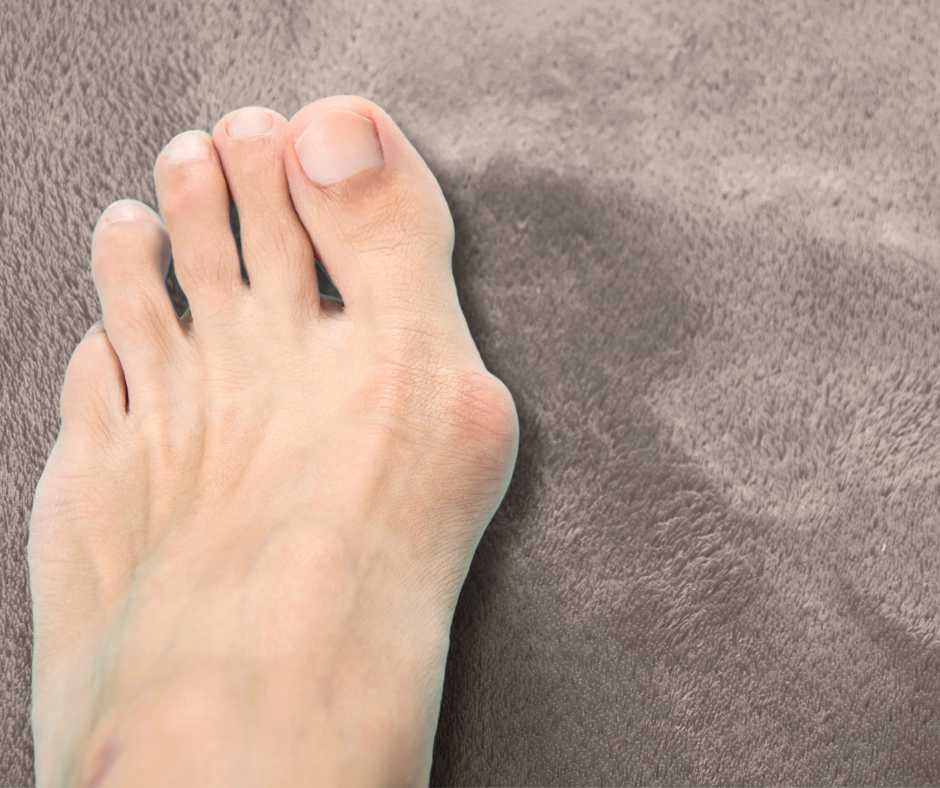
Bunions probably make you picture an older woman who spent years and years squeezed into stilettos. While high heels certainly don’t help, they aren’t the only cause of that bony bump on the side of your foot. The truth is that bunions show up on much younger feet, on athletes, and even on people who have never touched a pair of heels in their lives. We at Desert Podiatric Medical Specialists explain the reasons below.
Genetics
The biggest factor in who gets a bunion is actually your DNA. You don’t necessarily inherit the bunion itself; you inherit the foot structure that makes you prone to one. If you have naturally flat feet, low arches, or incredibly flexible ligaments, your foot is more likely to collapse inward when you walk.
This collapse puts pressure on your big toe joint. Over thousands of miles, that pressure physically pushes the bone out of place.
Sports
Athletes are another group that often deals with bunions, though they usually call them a nuisance rather than a deformity. If you are a runner, a ballet dancer, or a basketball player, you are demanding a lot of your forefoot.
For a runner with even a slight mechanical flaw, that repetitive push-off phase of your stride acts like a hammer against the big toe joint. If your athletic shoes are too narrow or if you are training on hard surfaces, you can actually accelerate the shifting of the bone.
In these cases, the bunion might look smaller than a typical one, but it is much more inflamed and painful because of the constant athletic strain.
Tailor’s Bunion
While the typical bunion happens at the base of the big toe, there is a variation called a bunionette, or a Tailor’s Bunion. This is a bony bump that forms on the outside of the foot at the base of the pinky toe.
This version is often caused by a different set of mechanics, specifically, a foot that is too wide for standard shoes or a tendency to walk on the outer edges of your feet.
What Makes These Bunions Different?
While an older person might deal with stiff, arthritic joint pain, a younger person often deals with acute bursitis. Because the joint hasn’t worn out yet, the pain is usually more about the skin and soft tissue being pinched than the bone itself.
If you’re experiencing foot pain, discomfort, or changes in how you walk, come see the expert team at Desert Podiatric Medical Specialists. With locations in Tucson and Oro Valley areas of Pima County, Arizona, Bradley A. Whitaker, D.P.M., FACFAS, Peter C. Merrill, D.P.M., AACFAS, and Zeno Pfau, D.P.M., are here for you. Call us at (520) 575-0800 or contact us online!