How To Spot the Signs of Achilles Tendonitis
The Achilles tendon connects the calf muscles to the heel bone, and it is the thickest, strongest cord in the human body. But because it works so hard, it is also prone to getting angry. But we at Desert Podiatric Medical Specialists don’t typically see Achilles tendonitis pop up overnight; instead, it sends a series of RSVP cards before arriving at the holiday party. Let’s break it down into phases.
Phase 1: Are You at Risk for Achilles Tendonitis?
Even if your heels feel fine right now, certain factors put you in the danger zone. For one, you are at high risk if you recently doubled your running mileage or jumped into high-intensity plyometrics without building a base. This approach is the #1 cause.
Also, if you can’t flex your foot upward very far, your calf muscles are short. This puts constant, passive tension on the Achilles, even when standing still.
And for those with flat feet, rolling your feet inward whips the tendon around like a bowstring with every step, which can cause uneven wear and tear.
Phase 2: Are You Getting Achilles Tendonitis?
The earliest stage of Achilles tendonitis is sneaky because it tricks you into thinking you are fine. The hallmark sign here is start-up stiffness.
You might start a run or a walk and feel a dull ache or tightness in the back of the heel for the first five minutes. But then, magically, it disappears as the muscles get warm. You finish your workout feeling great, only for the stiffness to return an hour after you sit down.
This is the pre-tendonitis phase. The tendon is irritated, but it creates its own natural lubricant when warm. If you ignore this rust on the hinge feeling, it will almost certainly progress to the next stage.
Phase 3: Do You Have Achilles Tendonitis?
If you ignore the warning signs, the condition moves into full-blown Achilles tendonitis. Here is how to tell if you have officially arrived:
- The Morning Hobble: Stepping out of bed results in sharp pain in the back of the heel. The tendon tightened up overnight, and that first stretch of the morning is excruciating.
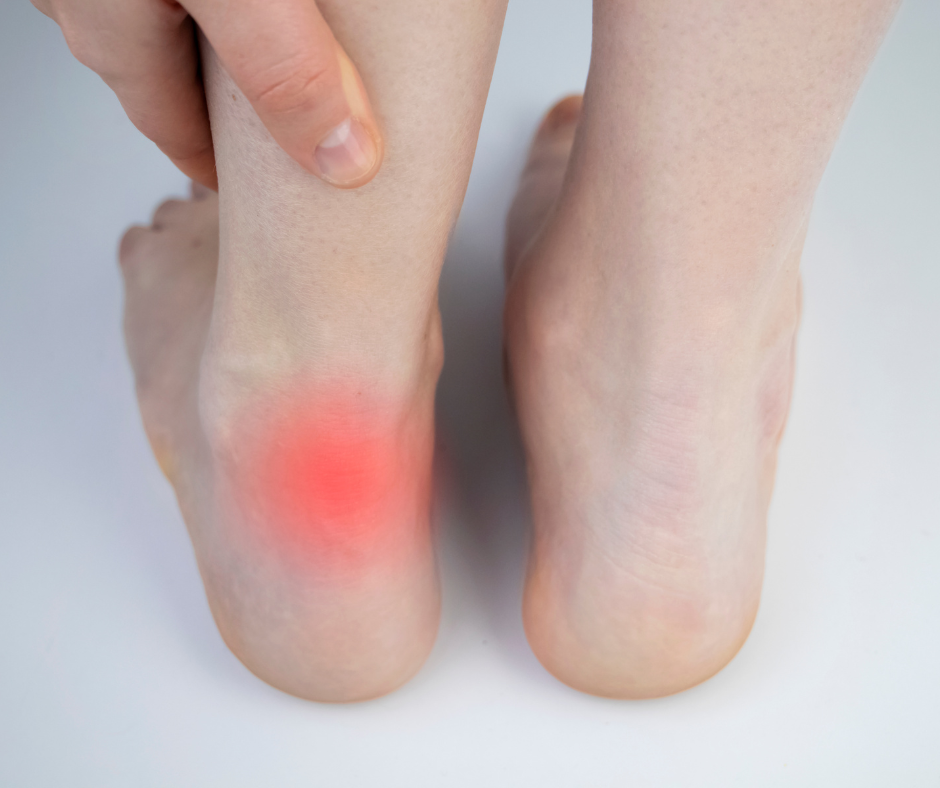
- The Pinch Test: If you squeeze the tendon (about 2 inches above the heel bone) and it makes you wince, that is a positive sign of inflammation. You might even feel a nodule or a lump in the tissue.
- Crepitus: A crunchy sensation. When moving the ankle up and down, you might feel a creaking vibration like stepping on dry snow. That is scar tissue and fluid rubbing against the tendon sheath.
Let us at DPMS be the judge of all 3 phases!
If you’re experiencing foot pain, discomfort, or changes in how you walk, come see the expert team at Desert Podiatric Medical Specialists. With locations in Tucson and Oro Valley areas of Pima County, Arizona, Bradley A. Whitaker, D.P.M., FACFAS, Peter C. Merrill, D.P.M., AACFAS, and Zeno Pfau, D.P.M., are here for you. Call us at (520) 575-0800 or contact us online!